

STEP Modernization For Elevator
When an older elevator begins to show its age through jerky movements, long wait times, and frequent maintenance calls, a full replacement is rarely the most cost-effective path. STEP Elevator Modernization offers an engineering-first solution to upgrade your existing vertical transportation framework.
By replacing obsolete relay logic or malfunctioning standalone controllers with STEP’s world-class integrated control technology, you can instantly transform a sluggish, high-maintenance lift into an ultra-reliable, smooth-riding asset.
The Modernization Package Components
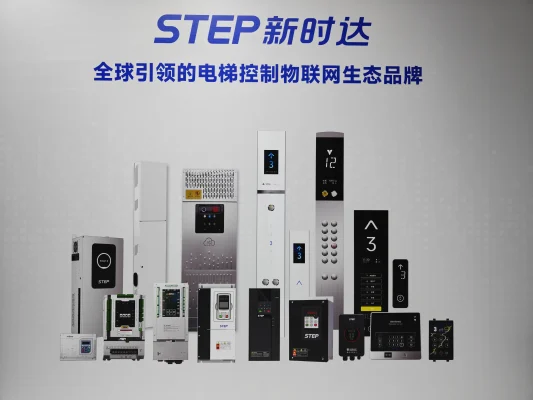
A standard STEP modernization replaces the vulnerable “brain” and electrical nervous system of your elevator while retaining the structural chassis, guide rails, and heavy counterweights:
-
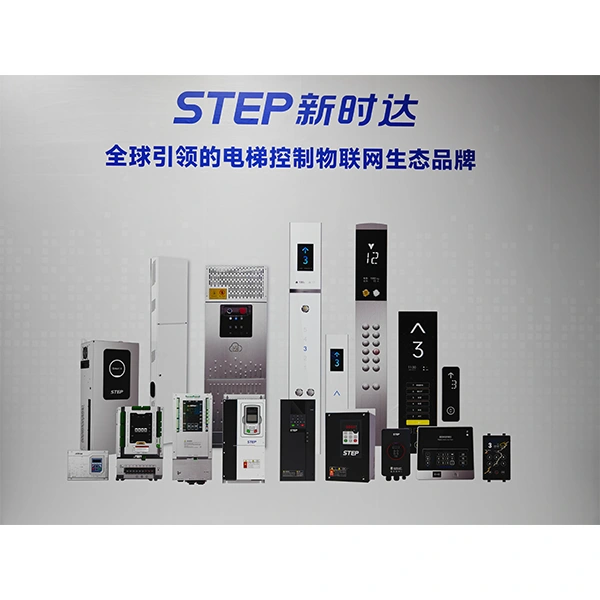
Integrated STEP Control System & Inverter (VVVF Drive): Combines the logic controller and motor drive into a singular, high-performance unit. It dynamically regulates voltage and frequency to deliver whisper-quiet motor operation and millimetric leveling accuracy at every floor.
-
Main Control PCB Board: The central processing unit utilizes advanced, high-speed 32-bit microprocessors to handle calculations instantly, offering built-in self-diagnostics and effortless fault-code reading for technicians.
-
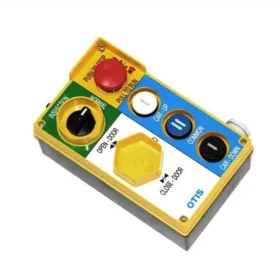
COP (Car Operation Panel) & LOP (Landing Operation Panel): Replaces faded, mechanical cabin buttons and hallway call boxes with sleek, modern micro-travel or touch-sensitive interfaces.
-
Vibrant Digital Displays: Integrated into the new COP and LOP fixtures, these modern TFT or LCD screen displays show real-time floor mapping, direction indicators, and system messages with absolute clarity.
5 Powerful Benefits of the STEP Control System
Upgrading to a STEP control architecture introduces five key engineering advantages that solve the most common frustrations of building owners:
1. Superior Energy Efficiency
STEP controllers utilize highly advanced energy-optimization algorithms that reduce overall electricity consumption by up to 30% to 35%. When paired with an optional regenerative drive framework, power generated during braking can actually be fed back into the building’s power grid.
2. Industry-Leading CANbus Serial Communication
Legacy systems require hundreds of individual wires running up and down the elevator shaft, leading to signal degradation and complex troubleshooting. STEP employs a simplified CANbus serial network that slashes hoistway wiring by over 80%, greatly reducing installation time and eliminating electromagnetic interference.
3. Smart Traffic Dispatching
No more endless waiting in the lobby. STEP’s intelligent dispatching software analyzes building traffic patterns in real-time. It groups passengers efficiently to reduce empty bypass runs, drastically cutting down wait times during peak morning and evening rushes.
4. Flawless Ride Comfort (Direct-to-Floor Technology)
STEP’s variable frequency vector control adjusts torque dynamically based on the cab’s real-time load. This eliminates the “creep-to-floor” slowdown phase common in older elevators, providing a perfectly seamless curve of acceleration and deceleration.
5. Universal Compatibility & Open Maintenance
STEP systems are engineered to be universally adaptable, easily retrofitting onto third-party gearless or geared traction machines. Because the system utilizes an open, easy-to-navigate parameter menu, your local maintenance team can easily service the lift without being locked out by restrictive proprietary software.
Technical Specification Matrix
| Feature | Legacy Elevator Systems | Modernized STEP System |
| Drive Technology | Two-speed / Separate Analog Drive | Integrated Intelligent VVVF Vector Control |
| Wiring Architecture | High-density Parallel Matrix | Simplified CANbus Serial Loop |
| Leveling Accuracy | ±15mm to 30mm (Frequent tripping hazard) | Less than ±2mm (Dead-accurate flush alignment) |
| Troubleshooting | Manual relay tracking | Direct on-board LCD fault-code history |








Reviews
There are no reviews yet.